0%

Table of Contents

To be honest, the whole mig wire scene has been buzzing lately about automation. Everyone's trying to get robots doing more of the welding, and that means the wire has to be consistent. Like, shockingly consistent. Used to be, a little variation in the feed rate, a bit of inconsistency in the coating… it didn’t matter much. A skilled welder could compensate. Now? Robot throws a fit. It’s a different beast. I spent three days last month at a factory in Jiangsu, watching them try to integrate a new robotic arm, and the wire kept tripping it up. It was a mess.

Have you noticed, though, that everyone focuses on the chemistry and the mechanical properties, and forgets about how it feels to actually work with? I've seen designers spec out wire that's just a nightmare to feed through the liner. It kinks, it catches, it gets birdnested... and then the welder’s wasting time untangling it, instead of actually welding. Strangel,y, they don’t factor that lost time into their cost calculations. They’re chasing fractions of a percent improvement in weld strength while ignoring a ten percent hit in productivity.

Anyway, I think the materials themselves are getting interesting. Most people still go with steel, obviously – ER70S-6 is the workhorse, right? But there's a lot of experimentation with stainless steels, aluminum alloys… even nickel-based alloys for specialized applications. I encountered this at a shipbuilding yard in Shanghai last time, they were using a super duplex stainless steel mig wire for some critical welds. It smelled… metallic, sharp. Not like the regular steel wire, which has a sort of oily, industrial smell. It's heavier, too, feels… premium, I guess. Handling it, you just know it's a different beast.

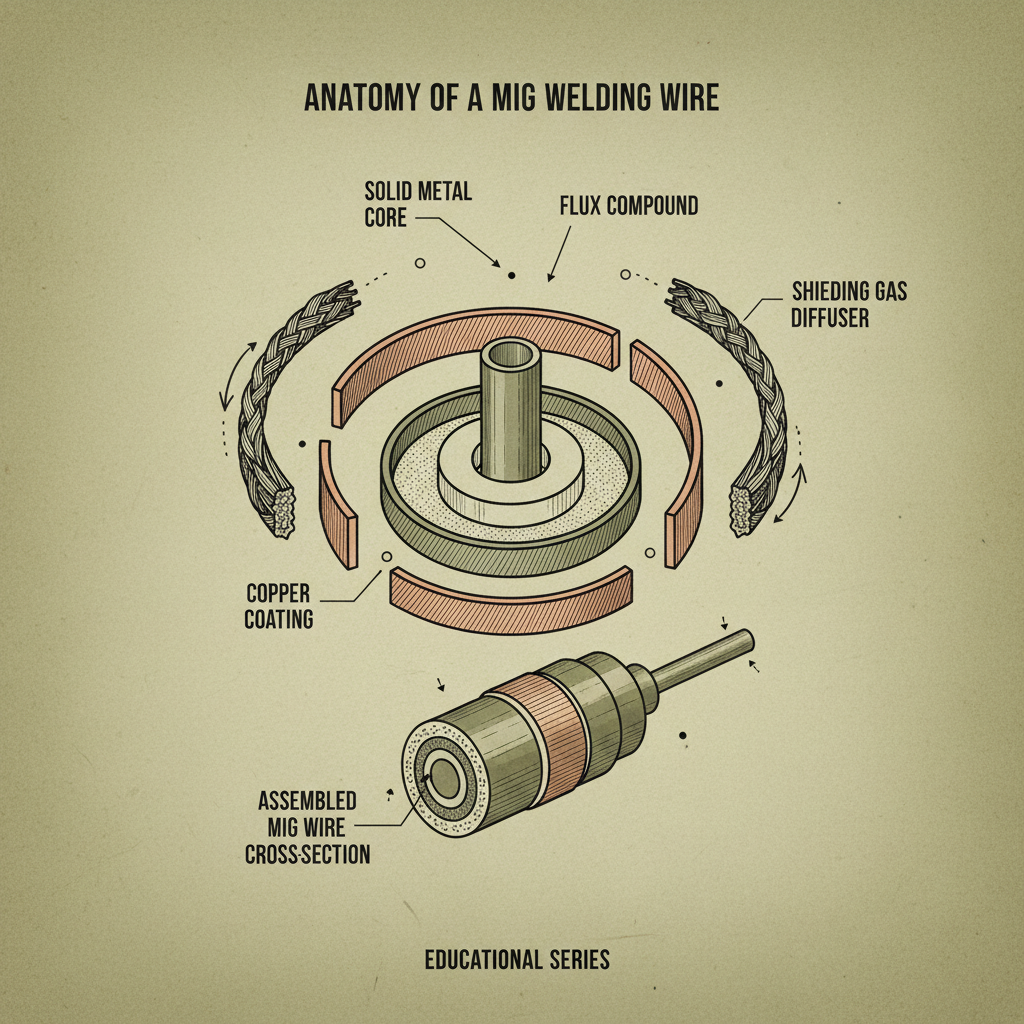
Advancements in mig wire Technology and Practical Welding Considerations

The Rise of Automation in mig wire

Advancements in mig wire Technology and Practical Welding Considerations

The big push is towards more efficient robotic welding processes. This demands very high consistency in the mig wire. Variations that were once negligible now cause major issues. It’s really changed how we approach quality control, and it’s driven demand for tighter tolerances on diameter, coating thickness, and chemical composition. We’re seeing more and more suppliers investing in advanced monitoring and sorting equipment to meet these requirements.

Honestly, a lot of the smaller suppliers are struggling to keep up. They’re used to selling based on price, and now they have to demonstrate that they can consistently deliver wire that meets these demanding specs.

The Often-Overlooked Usability of mig wire

I keep telling the engineers, “It’s not just about the numbers, it's about how it feels in the welder’s hand." A wire that constantly kinks or jams is going to slow down production, increase scrap, and frustrate the welders. And a frustrated welder? That’s a recipe for errors. They're looking at tensile strength and yield strength, but forget about feedability.

I’ve seen wires with inconsistent coatings that cause erratic arc behavior and make it difficult to achieve a clean, uniform weld. That creates a lot of rework.

Another thing – the packaging. Sounds silly, right? But a poorly designed spool or package can lead to tangling and damage during shipping and handling. We had one supplier who switched to a cheaper cardboard spool, and the wire was arriving at job sites all twisted up.

Material Evolution: Beyond Standard Steel

We’re definitely seeing a move beyond traditional ER70S-6. Stainless steel wires are becoming more common for corrosion-resistant applications. Aluminum wires are gaining traction in the automotive and aerospace industries. But the real interesting stuff is happening with the high-nickel alloys. They're expensive, but for joining dissimilar metals or high-strength applications, they're often the only option.

There's a lot of R&D going into developing new wire alloys that offer improved weldability, strength, and corrosion resistance. Some suppliers are even experimenting with flux-cored wires that contain proprietary additives to enhance the weld properties. I saw one the other day claiming to improve penetration by 15% - it looked promising, but you always have to be skeptical until you try it in the real world.

The cost is always a factor, though. These specialty wires can be significantly more expensive than standard steel wire, so you have to weigh the performance benefits against the added cost.

Real-World Testing: Beyond the Lab

Look, lab tests are important, sure. Tensile strength, impact resistance, corrosion testing… all that stuff. But the real test is how the wire performs on a construction site, under actual welding conditions. You need to see how it handles in different positions, with different joint configurations, and with welders of varying skill levels.

We’ve started doing more field testing, where we send wire to different job sites and have the welders use it in their everyday work. Then we collect feedback and analyze the results. It’s a lot more time-consuming than running lab tests, but it gives us a much more accurate picture of how the wire will perform in the real world.

mig wire Performance Comparison


How Users Actually Employ mig wire

What’s fascinating is how different welders use the same wire. Some will crank up the voltage and current, trying to get a faster weld. Others will dial it back, focusing on precision and minimizing heat input. It's not always about following the manufacturer's recommendations.

I’ve seen welders adjust their technique based on the type of material they’re welding, the position of the weld, and even the ambient temperature. It's a skill, really. A subtle art.

Advantages, Disadvantages, and the Practical Truth

Okay, the advantages are obvious: high deposition rates, good weld quality, relatively easy to learn. But the disadvantages? Shielding gas is a pain. It's expensive, you need to store it properly, and the wind can blow it away. And then there’s the whole issue of spatter. Cleaning up spatter is a time-consuming and messy job. Later… forget it, I won't mention it.

The truth is, no mig wire is perfect. Each one has its strengths and weaknesses. The key is to choose the right wire for the application and to train the welders to use it properly.

And don’t believe everything the sales reps tell you. They're selling a product. You need to do your own testing and make your own judgment.

Customization and Application Examples

Customization is definitely possible. We had a customer, a small boss in Shenzhen who makes smart home devices, insisted on changing the interface to last month, the result was...a complete production halt because the wire diameter wasn't compatible with the new feeder. A costly mistake.

But seriously, you can often specify different wire diameters, coatings, and alloy compositions to meet your specific needs. We once worked with a bridge construction company that needed a wire with a very specific chemical composition to ensure compatibility with the bridge steel. It took some development work, but we got it done.

It’s all about understanding the application and working with a supplier who is willing to go the extra mile.

mig wire Application Comparison Table

Application Type Recommended mig wire Type Typical Welding Position Estimated Cost/Kg
Automotive Chassis ER70S-6 Flat & Horizontal $2.50
Stainless Steel Piping 308LSi All Positions $4.00
Shipbuilding (Hull) Duplex Stainless Steel Flat & Horizontal $7.00
Construction (Structural Steel) ER70S-3 Flat & Vertical $2.00
Aerospace Components Aluminum 5356 All Positions $6.50
High-Strength Joints Nickel Alloy All Positions $12.00

FAQS

What’s the biggest mistake people make when choosing mig wire?

Ignoring the base metal. You have to know what you're welding to before you pick a wire. I've seen guys try to weld high-carbon steel with a wire designed for mild steel, and it's a disaster. Cracking, porosity, the works. It's all about compatibility. It's not just about the tensile strength numbers; it’s about how the materials react together under heat. Seriously, spend the time to understand the metallurgy.

How important is shielding gas, really?

Crucial. Absolutely crucial. Shielding gas protects the weld pool from atmospheric contamination, and without it, you'll get porosity and oxidation. The type of gas you use depends on the wire and the base metal. Argon is common for aluminum, CO2 for steel, and mixtures for other materials. Even a slight draft can disrupt the gas shield, so you need to be careful about welding outdoors or in windy conditions.

What’s the best way to store mig wire to prevent issues?

Keep it dry! Moisture is the enemy. Moisture can cause porosity and hydrogen embrittlement, which weakens the weld. Store the wire in a sealed container, ideally with desiccant packs to absorb any moisture. If the wire has been exposed to moisture, you may need to bake it in an oven to dry it out before use. Always refer to the manufacturer’s instructions.

What causes birdnesting in mig welding, and how do I prevent it?

Birdnesting is that tangled mess of wire that forms at the wire feeder. It's usually caused by friction between the wire and the liner, or by a worn or damaged liner. Make sure the liner is clean and properly sized for the wire. Also, check the wire tension and the drive roll pressure. Using the right type of liner for the wire material is critical too.

Is more expensive mig wire always better?

Not necessarily. More expensive wire can offer better performance, but it's not always worth the extra cost. You need to consider the application and your welding requirements. Sometimes, a standard wire will do just fine. It's about finding the right balance between cost and performance. Don't fall for the hype.

Can mig wire be used for repairs on rusted metal?

It can, but you need to prepare the surface properly. Remove as much rust as possible with a wire brush or grinder. If the rust is severe, you may need to use a special anti-rust primer before welding. Also, use a wire designed for welding on rusty or dirty metal, and adjust your welding parameters accordingly. Don't just try to weld over the rust; it won't hold.

Conclusion

So, where does all this leave us? We've talked about automation, usability, materials, testing, and customization. Ultimately, choosing the right mig wire isn't just about picking the highest-rated option. It’s a practical decision driven by specific application requirements, skill level, and budget. It’s about understanding the subtle nuances of the process and making informed choices that lead to strong, reliable welds.

Ultimately, whether this thing works or not, the worker will know the moment he tightens the screw. And that’s the truth of it. If you want to learn more about finding the right mig wire for your needs, check out our website: mig wire.
David Chen

David Chen

David Chen is the North American Sales Manager for Hebei Yujinhong Technology. Based in the US, David is responsible for expanding our presence in the key markets of the USA and Canada. He has a strong background in industrial sales and distribution, having previously worked with leading suppliers of welding
Previous The Versatile 6013 Welding Rod A Comprehensive Guide to Applications and Techniques
Next Navigating the Evolving Landscape of Modern Welding Wire Technology