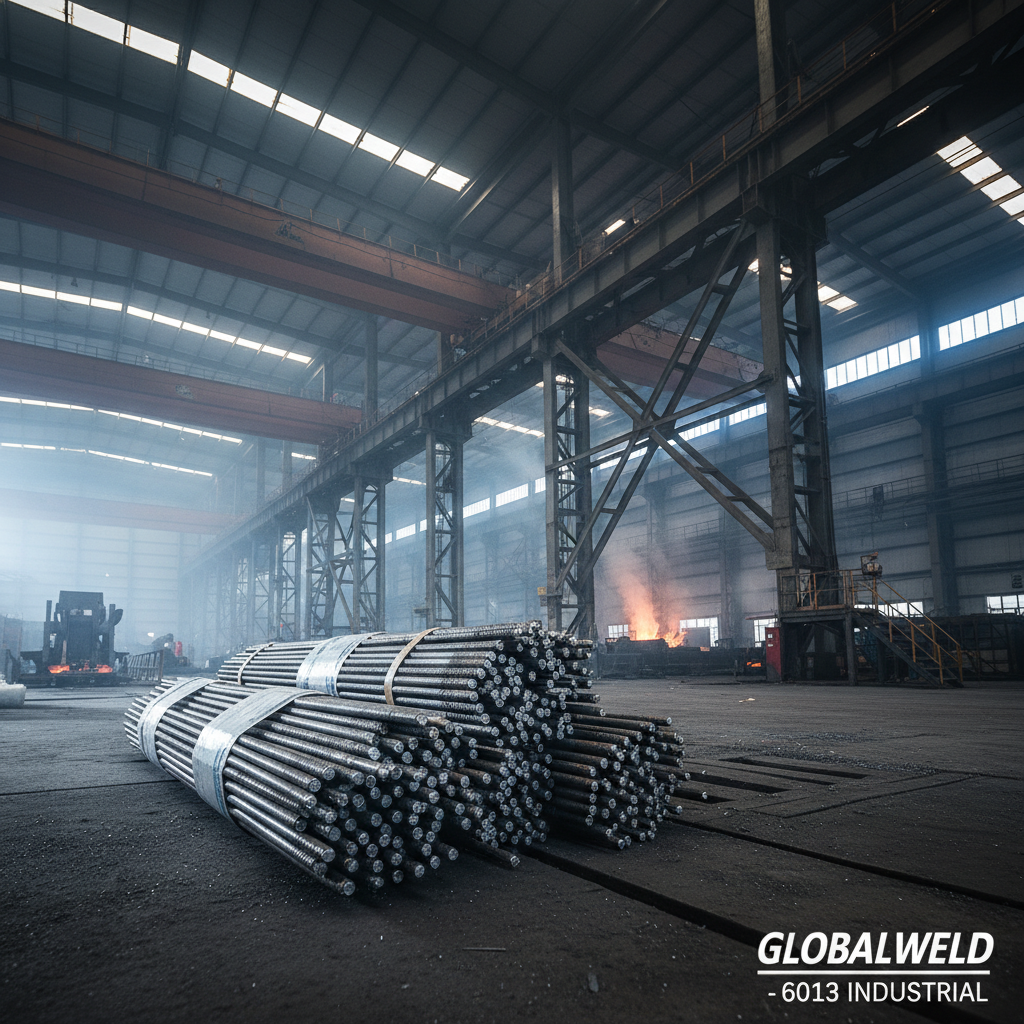
In the demanding world of heavy industrial fabrication, the integrity of a weld can be the difference between structural success and catastrophic failure. The use of submerged welding wire has emerged as a cornerstone for high-performance carbon steel welding, offering a level of stability and quality that traditional arc welding often struggles to match. By utilizing a granular flux to shield the weld pool, this method ensures a clean, high-strength bond essential for the most rigorous engineering standards.
Globally, the adoption of submerged arc welding (SAW) is driven by the need for increased deposition efficiency and superior mechanical properties. From the construction of massive pressure vessels to the assembly of large-diameter oil and gas pipelines, the industry relies on the consistency provided by specialized wires like the AWS A5.17 EL12, EM12, and EM12K grades. These materials are engineered to handle high-speed filling and welding, ensuring that the resulting joints can withstand extreme tensile stresses and environmental pressures.
Understanding the nuances of submerged welding wire—including its compatibility with sintering fluxes and its sensitivity to heat input—is critical for any project manager or welding engineer. This guide explores the technical advantages, practical applications, and rigorous maintenance requirements of these materials, providing a comprehensive roadmap for achieving optimal weld quality in heavy-duty industrial environments.
Technical Specifications of Submerged Welding Wire
The submerged welding wire grades AWS A5.17 -EL12, EM12, and EM12K are specifically formulated for the high-demand welding of carbon steels. These wires are designed for a specialized process where the arc is completely submerged beneath a layer of granular flux, which not only shields the weld from atmospheric contamination but also stabilizes the arc. This technical approach results in a weld of exceptionally high quality and stability, making it the preferred choice for workpieces where failure is not an option.
Mechanically, these wires are engineered to deliver excellent weldability and high deposition efficiency. The interaction between the wire and the flux ensures an easy slag removal process and a clean, aesthetically pleasing weld shape. Because of their ability to maintain a stable arc even at high current levels, these wires are indispensable for filling large thickness grooves in heavy machinery and pressure vessels.
Core Performance Advantages of SAW Wires
One of the primary benefits of using submerged welding wire is the superior mechanical properties it imparts to the joint. The controlled environment of the submerged arc reduces the risk of porosity and oxidation, resulting in a weld metal with high tensile strength and toughness. This makes it ideal for structural components that must endure cyclic loading or extreme pressure.
Furthermore, the deposition efficiency of these wires is significantly higher than that of manual arc welding electrodes. This efficiency translates to reduced downtime and faster project completion rates, particularly in "filling" operations where large volumes of metal must be deposited quickly into a joint. The stability of the arc also minimizes spatter, reducing the need for extensive post-weld cleaning.
From a quality control perspective, the consistency of the weld bead is a standout feature. The fluid nature of the weld pool under the flux layer allows for a smooth transition and a uniform profile, which is critical for the longitudinal and circular seams found in large-diameter pipes and ships.
Practical Usage and Base Metal Compatibility
To achieve the best results, submerged welding wire must be paired with the correct sintering flux. Specifically, the use of SJ101, SJ301, and SJ431 fluxes allows for high-speed welding and filling of base metals. This synergy ensures that the chemical composition of the weld remains stable throughout the process.
Compatibility is key when working with tensile strength grades such as Q235, Q345, and Q355. These common carbon steel grades are perfectly suited for the AWS A5.17 series, providing a robust bond that meets the stringent requirements of prefabricated buildings and heavy-duty steel structures.
The application scope extends to the most critical infrastructure projects globally. Whether it is the construction of pressure vessels, transportation machinery, or large-diameter water and gas pipes, the use of submerged welding wire ensures that large thickness grooves are filled with maximum integrity and minimum risk of defects.
Comparative Efficiency in Industrial Applications
When evaluating the operational impact of submerged welding wire, the most striking metric is the speed of deposition. In heavy-wall pipe fabrication, the ability to lay down thick beads of metal in a single pass significantly reduces the number of weld layers required, thereby lowering the total heat input and the risk of distortion.
Compared to other welding methods, the "submerged" nature of the process removes the need for external shielding gas in many configurations and eliminates the blinding arc flash, improving the working environment for operators while maintaining a highly focused heat zone.
Performance Rating of Submerged Welding Wire Variants
Critical Precautions for Weld Integrity
The quality of a weld produced by submerged welding wire is directly influenced by the energy input. Excessive heat can degrade the mechanical properties of the weld metal, while insufficient heat may lead to lack of fusion. Therefore, a thorough process evaluation must be conducted based on the specific welding conditions of the project to formulate precise process specifications.
Surface preparation is equally vital. Before any arc is struck, the welding surface must be meticulously cleaned to remove rust, oil, moisture, and other impurities. The welding wire itself must also be free of contaminants. Failure to prepare the substrate can lead to inclusions and porosity, compromising the structural integrity of the final product.
Storage and Environmental Management
Flux management is a critical component of the submerged welding wire process. Fluxes must be baked before use to remove moisture: sintering flux requires baking at 300-350°C for 1-2 hours, while smelting flux requires 200-250°C. Moisture in the flux is a primary cause of hydrogen-induced cracking and porosity in the weld.
Storage conditions for both wires and fluxes must be strictly controlled to prevent degradation. Indoor temperatures should be maintained above 5°C, and relative humidity must not exceed 60%. To avoid ground-level moisture absorption, materials should be stored at least 300mm away from the ground and walls.
Proper organization in the warehouse is also necessary. Clear signage and classification of different wire grades ensure that the correct material is used for the specific job, preventing costly errors in the fabrication process.
Regional Variations and Common Grades
While AWS standards provide a global benchmark, regional preferences often dictate the specific grade of submerged welding wire used. In the Chinese market, for instance, certain varieties are more prevalent due to local steel specifications and industry standards.
Commonly used varieties include H08A, H08MnA, H10Mn2, and H10MnSi. These grades are selected based on the required strength of the base metal and the desired properties of the weld deposit, ensuring compatibility with the local carbon steel production.
Regardless of the regional designation, the goal remains the same: achieving a high-stability arc and superior mechanical properties. By aligning regional grades with international standards like AWS A5.17, manufacturers ensure that their products can be exported and used in global infrastructure projects.
Comparison of Common Submerged Welding Wire Varieties
| Wire Grade |
Primary Application |
Mechanical Strength |
Flux Compatibility |
| EM12K |
Pressure Vessels |
Very High |
Sintering SJ101 |
| H08A |
General Steel Structures |
Moderate |
Smelting Flux |
| H08MnA |
Bridge Construction |
High |
Sintering SJ301 |
| H10Mn2 |
Heavy Machinery |
Very High |
Sintering SJ431 |
| H10MnSi |
Pipeline Fabrication |
High |
Sintering/Smelting |
| AWS EL12 |
Oil & Gas Pipes |
High |
Sintering Flux |
FAQS
While both are AWS A5.17 grades, EM12K typically offers enhanced mechanical properties and a higher capacity for high-speed filling. The "K" variant is often preferred for heavier sections where maximum strength and deposition rates are required to maintain industrial throughput without sacrificing joint integrity.
Baking removes moisture from the flux. If moisture remains, it dissociates in the arc, introducing hydrogen into the weld pool. This can lead to hydrogen-induced cracking (HIC) and porosity, which significantly weakens the weld and can lead to structural failure in pressure vessels or pipes.
These wires are specifically designed for carbon steels. They are highly compatible with tensile strength grades such as Q235, Q345, and Q355. This makes them ideal for everything from simple prefabricated buildings to complex, heavy-duty transportation machinery.
Welding input energy (heat) directly impacts the grain structure of the weld metal. Too much heat can lead to grain coarsening, reducing toughness, while too little can cause lack of fusion. Proper process specification (WPS) is essential to balance these factors.
To maintain quality, store materials in a dry environment with relative humidity below 60% and temperatures above 5°C. Ensure they are kept at least 300mm off the floor and away from walls to prevent moisture seepage.
No, the AWS A5.17 EL12, EM12, and EM12K wires discussed here are specifically formulated for carbon steel. Stainless steel requires different alloy compositions to maintain corrosion resistance and mechanical properties.
Conclusion
In summary, submerged welding wire provides an unparalleled combination of deposition efficiency and weld quality for carbon steel applications. By integrating the right wire grades (such as EM12K) with appropriate sintering fluxes and adhering to strict pre-heating and storage protocols, manufacturers can ensure the structural integrity of critical infrastructure, from pressure vessels to large-scale ships.
As the industry moves toward greater automation and higher safety standards, the reliance on high-stability submerged arc processes will only grow. We recommend that engineers prioritize meticulous surface preparation and precise heat input calculations to fully leverage the capabilities of these materials. For high-quality welding solutions, visit our website: www.steeltoolschina.com