
High-Performance Welding Electrode Solutions for Norway's Industrial Sector

Providing precision-engineered consumables designed to withstand the extreme climatic conditions and rigorous safety standards of the Norwegian manufacturing landscape.

High-Performance Welding Electrode Solutions for Norway's Industrial Sector

We deliver specialized cutting and welding consumables that ensure structural integrity for Norway's offshore, maritime, and heavy industrial infrastructure.

Industrial Welding Landscape in Norway

Adapting to Arctic conditions and high-precision maritime engineering requirements.

Norway's manufacturing sector is characterized by its extreme focus on the oil and gas industry and maritime shipping. In this environment, the use of a high-quality welding rod is not just a matter of efficiency, but of safety, as structures must resist corrosive salt spray and freezing temperatures.

The local market demands strict adherence to NORSOK standards. This requires consumables like the metal welding rod to possess exceptional fatigue strength and crack resistance, specifically for thick-walled pressure vessels and deep-sea pipelines.

Economic shifts toward green energy and offshore wind farms have increased the demand for lightweight, corrosion-resistant materials. This has led to a surge in the adoption of mig aluminum wire for high-speed, high-strength aluminum alloy assemblies in the North Sea region.

Evolution of Welding Technology in Norway

From traditional ship-building techniques to automated robotic integration.

Market Development History

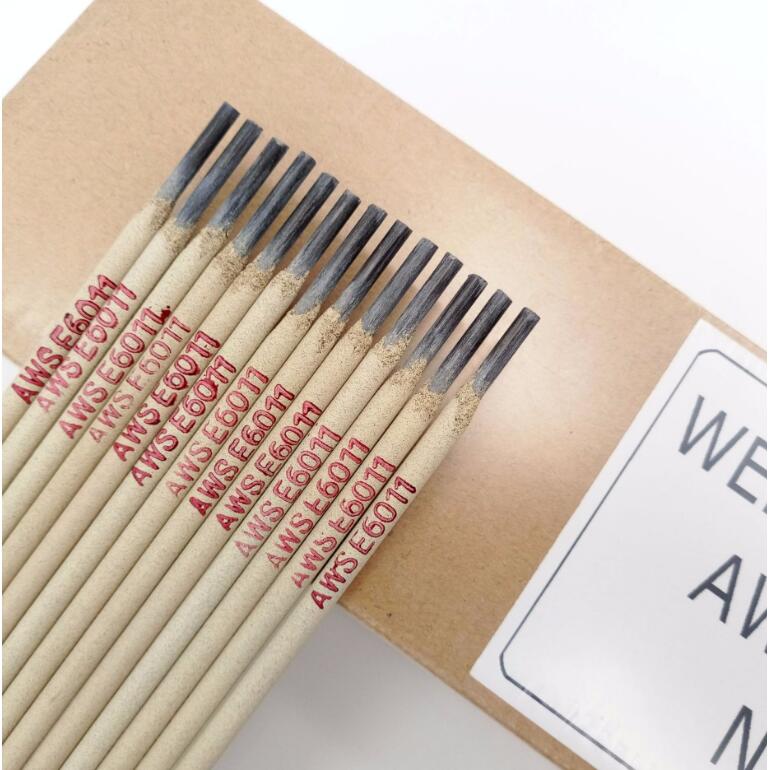
In the 1970s and 80s, the boom of the North Sea oil sector shifted the focus toward heavy-duty manual arc welding. During this era, the standard welding electrode was the primary tool for constructing massive offshore platforms, focusing on penetration and basic structural strength.

By the early 2000s, the transition toward Semi-Automatic welding became evident. The introduction of high-feed welding wire allowed Norwegian shipyards to increase production speed while maintaining the strict metallurgical properties required for Arctic-grade steel.

From 2015 to the present, the industry has pivoted toward digitalization and precision. Advanced pulse-MIG and TIG processes have become the norm, emphasizing low-spatter and high-efficiency deposition rates to reduce post-weld cleaning costs in expensive Norwegian labor markets.

Future Development Trends

AI-Driven Consumable Selection

Integration of AI to analyze base metal composition in real-time to suggest the optimal chemistry of the welding consumable for zero-defect joints.

Low-Carbon Green Welding

A shift toward consumables that support low-heat input processes to reduce the carbon footprint of the manufacturing cycle, aligning with Norway's 2030 climate goals.

Advanced Nano-Coatings

Development of electrode coatings that minimize hydrogen diffusion, further preventing cold cracking in extreme sub-zero temperatures.

Future Trends and Strategic Outlook

Predicting the next frontier of metal joining technology in Northern Europe.

Robotic Integration
Increasing shift toward fully automated welding cells using precision-fed wires to eliminate human error in harsh environments.
Hybrid Laser-Arc
Combining laser precision with arc filler metals to achieve deeper penetration and minimal thermal distortion.
Hydrogen-Free Consumables
Focusing on ultra-low hydrogen levels to prevent delayed cracking in high-strength steel used in bridges and piers.
Smart Monitoring
IoT-enabled feeding systems that monitor the consumption rate of welding wires to optimize supply chains.

Industry Outlook

Based on Google search trends in the Nordic region, there is a growing interest in "sustainable metallurgy" and "automated welding for offshore wind." This suggests that the market will move away from generic products toward highly specialized alloys that can survive 25+ years in salt-heavy environments without maintenance.

We anticipate that within the next 3-5 years, the integration of additive manufacturing (3D metal printing) using specialized wire feeds will revolutionize the repair of legacy oil rigs in Norway, reducing the need for complete part replacement.

Localized Application Scenarios in Norway

Tailored welding solutions for Norway's most demanding engineering projects.

1. Offshore Oil Rig Maintenance

Using high-impact welding electrode for structural repairs on platforms in the Norwegian Sea, ensuring weld joints resist brittle fracture at -20°C.

2. Aluminum Hull Shipbuilding

Application of mig aluminum wire for the construction of fast ferries and aquaculture vessels, focusing on lightweight strength and oxidation resistance.

3. Subsea Pipeline Installation

Utilizing specialized metal welding rod for TIG welding of high-pressure pipelines, providing the hermetic seal required for deep-sea gas transport.

4. Arctic Bridge Construction

Implementing heavy-duty welding wire for the fabrication of steel girders in Northern Norway's infrastructure, optimizing for thermal expansion and contraction.

5. Hydroelectric Power Plant Repair

Using precision welding rod for the cladding and repair of turbine components, preventing cavitation and erosion from high-velocity water flow.

Brand Story

Global Development Journey of Hebei Yujinhong Technology Co., Ltd.

Foundational Excellence

Established with a mission to solve the precision gap in cutting and welding tools, focusing on metallurgical purity from day one.

Technical Breakthroughs

Developing proprietary alloy compositions that significantly reduced porosity in high-stress industrial welding applications.

Global Expansion

Expanding our reach to Europe, specifically targeting the rigorous standards of the Nordic markets to prove our quality.

Sustainable Innovation

Investing in eco-friendly production lines to ensure our consumables meet the strictest EU environmental regulations.

The Future of Joining

Committed to empowering global manufacturers with tools that blend traditional reliability with future-proof technology.

Comprehensive Welding Consumable Portfolio for Norway

A full suite of tools designed for maritime, energy, and heavy industrial applications.

Norwegian Industrial Welding FAQ

Expert answers to common technical challenges in the Norwegian metalworking sector.

Which welding electrode is best for low-temperature Arctic steel?

For Arctic conditions, we recommend basic-coated electrodes with ultra-low hydrogen levels to ensure high notch toughness and prevent cold cracking in temperatures below -40°C.

How to prevent oxidation when using mig aluminum wire in humid coastal areas?

Utilizing high-purity aluminum alloys and ensuring a consistent flow of high-grade argon shielding gas is critical to prevent oxide inclusions in coastal Norway's humid environment.

Does your metal welding rod comply with NORSOK M-601 standards?

Yes, our specialized metal rods are engineered to meet the stringent chemical and mechanical requirements of NORSOK standards for offshore oil and gas applications.

What is the advantage of using a specialized welding wire for offshore wind turbines?

Specialized wires provide superior fatigue resistance and corrosion protection, which are essential for the constant vibration and salt-air exposure typical of wind turbine foundations.

Can a welding rod be used for both shipbuilding and pipeline repair?

While some general-purpose rods exist, we recommend separate consumables for shipbuilding (focusing on ductility) and pipelines (focusing on high pressure and leak-proof seals).

How to store welding electrodes to avoid moisture in Norway's climate?

We recommend using heated drying ovens (quivers) to maintain the electrodes at a specific temperature, preventing moisture absorption that leads to hydrogen embrittlement.

Request Technical Consultation

Our engineering team is ready to provide customized welding consumable specifications for your projects in Norway.

Contact Us Now

If you are interested in our products, you can choose to leave your information here, and we will be in touch with you shortly.