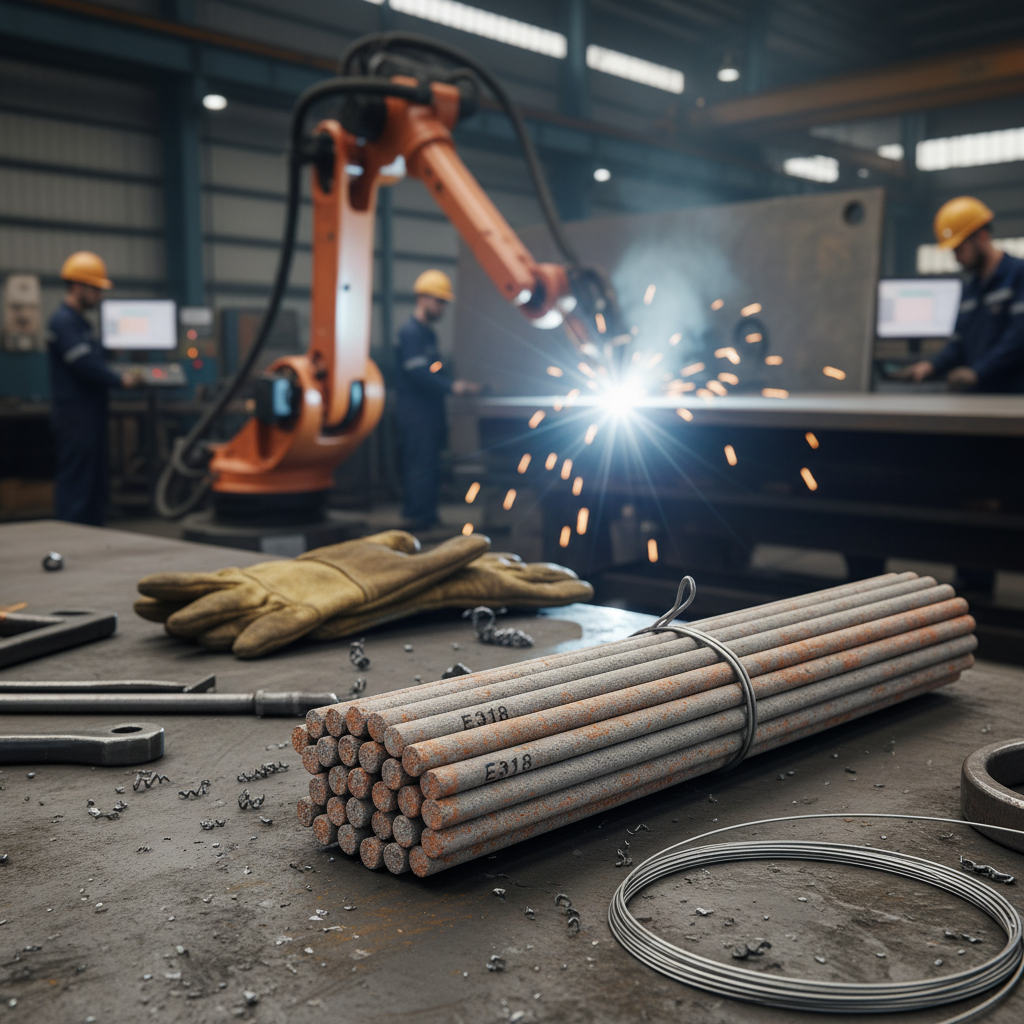
Aluminum welding rod plays a crucial role in modern manufacturing, construction, and repair across a vast array of industries. Its unique properties – lightweight, corrosion resistance, and high strength-to-weight ratio – make it indispensable in applications ranging from aerospace engineering to automotive fabrication. Understanding the nuances of aluminum welding rod selection, techniques, and quality control is paramount for ensuring structural integrity and long-term performance of welded joints.
Globally, the demand for aluminum and, consequently, aluminum welding rod is steadily increasing, driven by factors like the growing automotive industry’s shift toward lightweight materials for fuel efficiency, and the expanding infrastructure development in emerging economies. This demand presents both opportunities and challenges for manufacturers and end-users alike, necessitating continuous innovation in welding technologies and material science.
The ability to efficiently and reliably join aluminum components using aluminum welding rod is no longer simply a manufacturing process, but a foundational element supporting innovation in diverse sectors, facilitating advancements in sustainability, and enabling the creation of lighter, stronger, and more durable products.

The widespread adoption of aluminum alloys in various industries necessitates high-quality welding solutions, with aluminum welding rod being the cornerstone of many fabrication processes. The correct selection and application of an aluminum welding rod directly impacts the structural integrity, corrosion resistance, and overall lifespan of the welded component.
Choosing the appropriate aluminum welding rod isn't simply a matter of alloy compatibility; factors such as the welding process (TIG, MIG, stick), the base metal thickness, and the intended service environment must all be carefully considered. Investing in understanding these variables can significantly reduce defects, rework, and potential failures.
For beginners, 4043 aluminum welding rod is often recommended. It's versatile, relatively easy to work with, and provides good weldability across a range of aluminum alloys. Its lower melting point and fluidity make it more forgiving for those new to aluminum welding. However, it's important to practice proper technique and maintain a clean welding environment for optimal results. Always refer to the manufacturer's specifications for compatibility with your base metal.
Porosity, or gas pockets in the weld, is a common issue when welding aluminum. Several factors contribute to this, including contamination of the base metal or welding rod, improper shielding gas coverage, and excessive arc length. Thoroughly cleaning the aluminum before welding, using a high-quality shielding gas (typically argon), maintaining a short arc length, and controlling welding speed can significantly reduce porosity. Preheating the base metal can also help to remove moisture.
4043 aluminum welding rod is a silicon-based alloy, providing excellent fluidity and crack resistance, particularly for casting alloys. 5356, on the other hand, is a magnesium-based alloy, offering higher strength and corrosion resistance, making it ideal for structural applications. 5356 generally requires more heat input and can be more prone to cracking if not welded correctly. Selecting the appropriate rod depends on the base metal alloy and the intended application.
Preheating is often beneficial, especially for thicker aluminum sections or in colder environments. Preheating reduces the temperature gradient during welding, minimizing distortion and cracking. It also helps to remove moisture from the base metal, which can contribute to porosity. The optimal preheating temperature depends on the alloy and thickness, but generally ranges from 100°F to 200°F (38°C to 93°C). Always consult welding guidelines for your specific material.
Aluminum welding rod can be susceptible to corrosion if exposed to moisture and contaminants. Store the rod in a dry, sealed container or package, preferably in a climate-controlled environment. Avoid storing it in areas with high humidity or near corrosive substances. If the rod has been exposed to moisture, it's recommended to bake it at a low temperature (around 200°F or 93°C) for a few hours to dry it out before use.
Argon is the most commonly used shielding gas for aluminum welding. It provides excellent arc stability and weld protection. For certain applications, a mixture of argon and helium can be used to increase heat input and improve penetration. The choice of shielding gas also depends on the welding process used. For TIG welding, pure argon is generally preferred, while MIG welding may benefit from an argon/helium mix, especially for thicker materials. Maintaining a consistent gas flow rate is critical for preventing oxidation.
In conclusion, aluminum welding rod represents a critical component in a vast array of industries, enabling the creation of lightweight, durable, and corrosion-resistant structures. Its importance is only set to grow as demand for aluminum alloys continues to increase, driven by factors like sustainability initiatives and the evolution of transportation technologies. Proper understanding of aluminum welding rod selection, welding techniques, and quality control measures are essential for ensuring structural integrity and long-term performance.
Looking ahead, continued innovation in filler metal compositions, welding processes, and digital integration will further optimize the efficiency, reliability, and sustainability of aluminum welding applications. Investing in training, research, and the adoption of advanced technologies will be crucial for maintaining a competitive edge in this dynamic field. For high-quality aluminum welding rod and expert support, visit our website: www.steeltoolschina.com