Selecting high-performance welding consumables often comes down to a balance between penetration depth, arc stability, and the specific metallurgy of the base metal. For industrial operators, finding reliable welding electrodes china means sourcing materials that can withstand rigorous structural demands while ensuring a flaw-free deposit. Whether the project involves heavy machinery or shipbuilding, the chemistry of the electrode coating determines the mechanical integrity of the final weld.
The challenge for many procurement managers is distinguishing between generic rods and specialized AWS-certified electrodes. For instance, the difference between an E6011 and an E7018 is not just a number; it is a fundamental difference in flux composition and hydrogen control. These variables directly impact the risk of cold cracking and the overall efficiency of the welding process in various positions, such as vertical-down or overhead welding.
By analyzing the technical specifications of professional-grade consumables, engineers can optimize their workflow and reduce the need for costly re-work. This guide examines the critical factors behind electrode performance and how welding electrodes china integrate into modern metal fabrication to ensure long-term structural stability across diverse industrial sectors.


At its core, a welding electrode consists of a metal core wire and a chemical flux coating. The core wire provides the filler metal, while the coating serves multiple purposes: stabilizing the electric arc, protecting the molten pool from atmospheric contamination, and adding alloying elements to the weld bead. In the context of professional manufacturing, the precision of this coating determines whether the weld will be porous or dense.
For electrodes like the E6011, a rutile-cellulosic potassium type, the composition is specifically engineered for deep penetration and all-position welding. This chemistry allows the arc to remain stable even in vertical-down positions, which is critical for rapid assembly in piping and structural steel. Understanding these components helps users select the correct rod for the specific base metal, whether it is low carbon steel or cast iron.
Arc stability is influenced by the ionisation properties of the electrode coating and the power source compatibility. Electrodes designed for AC and DC+ currents, such as the E6011, leverage specific potassium compounds to ensure the arc doesn't flicker, reducing spatter and making slag removal significantly easier. This efficiency is vital for maintaining high productivity in large-scale industrial projects.
Strong arc force and deep penetration at the vertical-down position are the primary technical advantages of cellulosic-type electrodes, enabling faster welding speeds without compromising the fusion of the root pass.
Beyond the arc, the moisture content of the coating is a critical factor. While some electrodes do not require pre-drying, those sensitive to dampness must be re-dried at 70°C-90°C for one hour. Failure to manage moisture can lead to hydrogen-induced cracking, a catastrophic failure in pressure vessels or bridge components where structural reliability is non-negotiable.
The chemistry of the flux coating does more than just shield the weld; it controls the mechanical properties of the deposited metal. For example, low-hydrogen coatings used in E7018 electrodes are designed to minimize the amount of diffusible hydrogen in the weld, which is essential for preventing underbead cracking in high-strength steel applications.
The integration of refined powder coating and professional checkout equipment ensures that every batch of electrodes maintains a consistent chemical profile, leading to stable mechanical performance in the final deposited metal.
Furthermore, the ability to resist rust, stomata, and cracking is a direct result of the purity of the raw materials used in the manufacturing process. When the coating is balanced correctly, the resulting weld bead exhibits an elegant molding and high resistance to environmental corrosion, which is a key requirement for offshore and shipbuilding industries.
When comparing different welding consumables, the industry relies on several key metrics: penetration depth, deposition rate, and slag removal ease. Low-carbon steel electrodes generally offer high deposition rates, while specialized rods for stainless steel or cast iron prioritize chemical compatibility and crack prevention over raw speed.
The following analysis represents the relative performance characteristics of various electrode types based on common industrial requirements. While specific values vary by application, the trend shows a clear trade-off between penetration depth and the ease of slag removal across different flux types.
Welding consumables are deployed across a vast array of economic sectors, each with unique demands. In the petroleum chemical industry and boiler manufacturing, the focus is on pressure vessel integrity, requiring electrodes that can pass X-ray flaw detection (II level). In these environments, the stability of the deposited metal's mechanical performance is the most critical factor.
Conversely, in the construction of buildings and bridges, the priority often shifts to versatility and all-position welding. The ability to weld in PA, PB, PC, PD, and PE positions allows contractors to execute complex joints without repositioning the entire workpiece, significantly lowering labor costs and project timelines.
The industry is moving toward more specialized alloys and refined production processes to meet the demands of extreme environments. There is a growing trend toward "smart" consumables that can offer better molten pool control and reduced spatter, which minimizes the need for post-weld grinding and polishing.
Sustainable development is also becoming a priority. Manufacturers are focusing on reducing the environmental impact of the flux production process and improving the efficiency of the welding arc to reduce energy consumption. This shift is expected to lead to electrodes that provide higher strength with lower material waste.
Additionally, the expansion of international certifications like ABS, BV, and DNV.GL indicates a global standardization of quality. As these standards evolve, the development of electrodes specifically for shipbuilding and offshore structures will likely focus on enhanced resistance to saltwater corrosion and cryogenic temperatures.
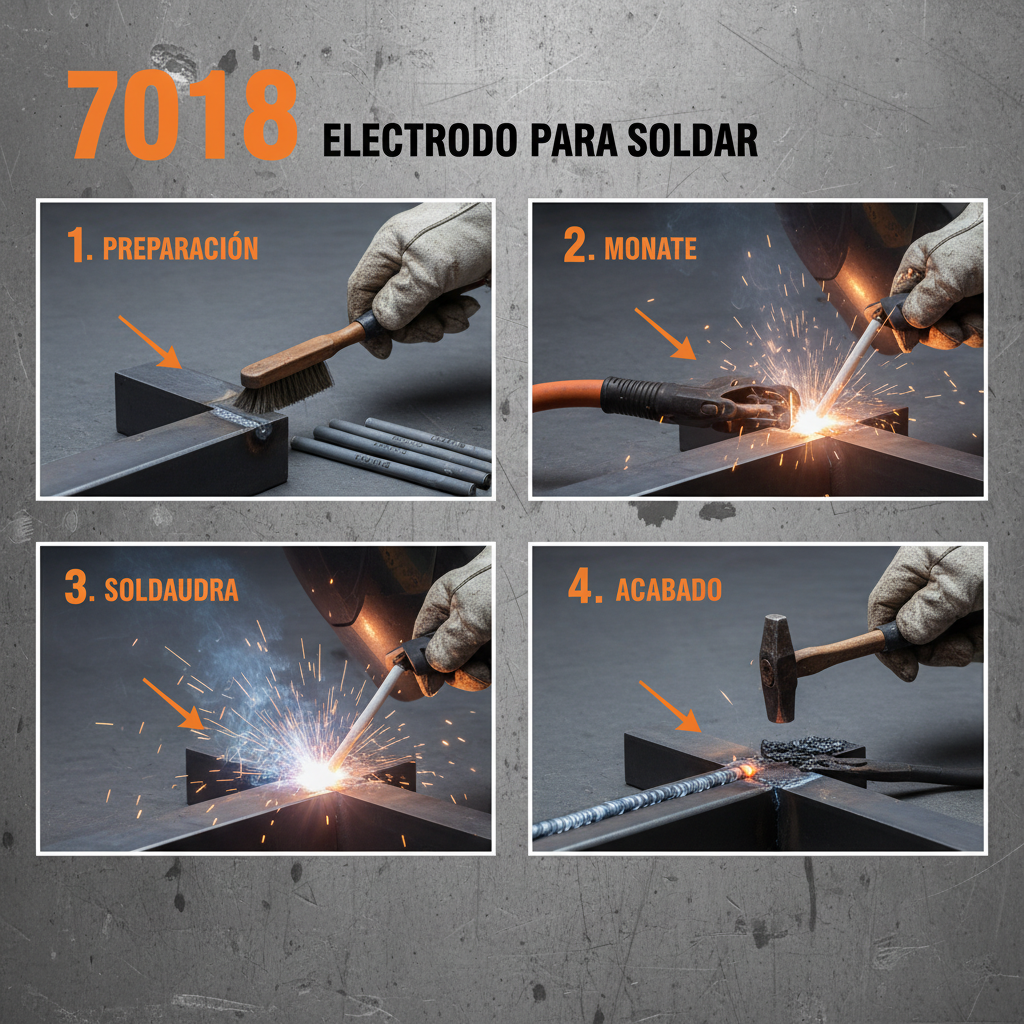
Despite advanced manufacturing, welding defects like porosity and slag inclusion can occur if the electrode is mismatched with the base metal or the environment. Porosity is often caused by the presence of oil, water, or rust on the weld area, which must be meticulously removed before starting the arc.
Another common limitation is the effect of dampness on the coating. As noted in technical guides, if an electrode is affected by moisture, re-drying it at 70°C-90°C for one hour is essential. Ignoring this step can lead to internal voids that compromise the structural integrity of the weld, especially in load-bearing joints.
To minimize these risks, professional procurement should focus on suppliers with complete testing equipment and a proven history of stable product quality. The following table provides a decision matrix for choosing the right electrode based on the specific challenge being addressed.
| Weld Challenge | Recommended Type | Key Requirement | Primary Benefit |
|---|---|---|---|
| Deep Penetration | E6011 / E6010 | Cellulosic Flux | Fast Root Pass |
| High Strength | E7018 / E7016 | Low Hydrogen | Crack Resistance |
| General Purpose | E6013 | Rutile Coating | Easy Arc Start |
| Cast Iron Repair | Cast Iron Rods | Nickel Alloy | Prevents Brittle |
| Corrosion Resistance | Stainless Steel | Chromium-Nickel | Oxidation Proof |
| Heavy Fabrication | AWS E7024 | High Deposition | Reduced Passes |
E6011 is a rutile-cellulosic potassium type designed for deep penetration and all-position welding, making it ideal for root passes. E6013 is a rutile-type electrode that offers a smoother arc and easier slag removal, primarily used for general-purpose fabrication where aesthetics and ease of use are more important than deep penetration.
No, not all electrodes require pre-drying. For example, E6011 generally does not need it. However, low-hydrogen electrodes like E7018 are highly sensitive to moisture. If they become damp, they must be re-dried at 70°C-90°C for one hour to prevent hydrogen-induced cracking in the weld metal.
E6011 electrodes support all-position welding, specifically PA, PB, PC, PD, and PE. They are particularly effective for vertical-down positions due to their strong arc force and superior molten pool control, which allows the welder to maintain a consistent bead without excessive sagging.
The weld area must be completely clean to ensure a high-quality bond. This involves removing all rust, oil, water, and other impurities. Contaminants in the weld zone can lead to porosity, slag inclusions, and a lack of fusion, which will cause the weld to fail X-ray flaw detection tests.
For industrial and maritime applications, look for approvals from ABS, BV, CCS, DNV.GL, LR, and NK. For general quality management and safety, CE, ISO, and TUV certifications are essential. These ensure the product meets international advanced standards for mechanical performance and safety.
Standard carbon steel electrodes (like E6011) cannot be used for stainless steel or cast iron. You must use specific Stainless Steel welding rods or Cast Iron welding rods. Using the wrong electrode will result in poor fusion, high brittleness, and rapid corrosion of the joint.
The selection of the correct welding electrode is a technical decision that directly impacts the safety and lifespan of industrial structures. From the deep penetration of rutile-cellulosic types to the low-hydrogen stability of high-strength rods, the chemistry of the coating defines the success of the weld. By adhering to strict preparation standards and selecting AWS-certified consumables, manufacturers can ensure that their products meet the rigorous demands of the global market.
For organizations seeking stable quality and competitive pricing for their welding consumables, partnering with a manufacturer that possesses strong technical power and complete testing equipment is essential. To explore a full range of professional welding electrodes and wires tailored to your specific project requirements, you are invited to visit www.steeltoolschina.com for detailed specifications and technical support.