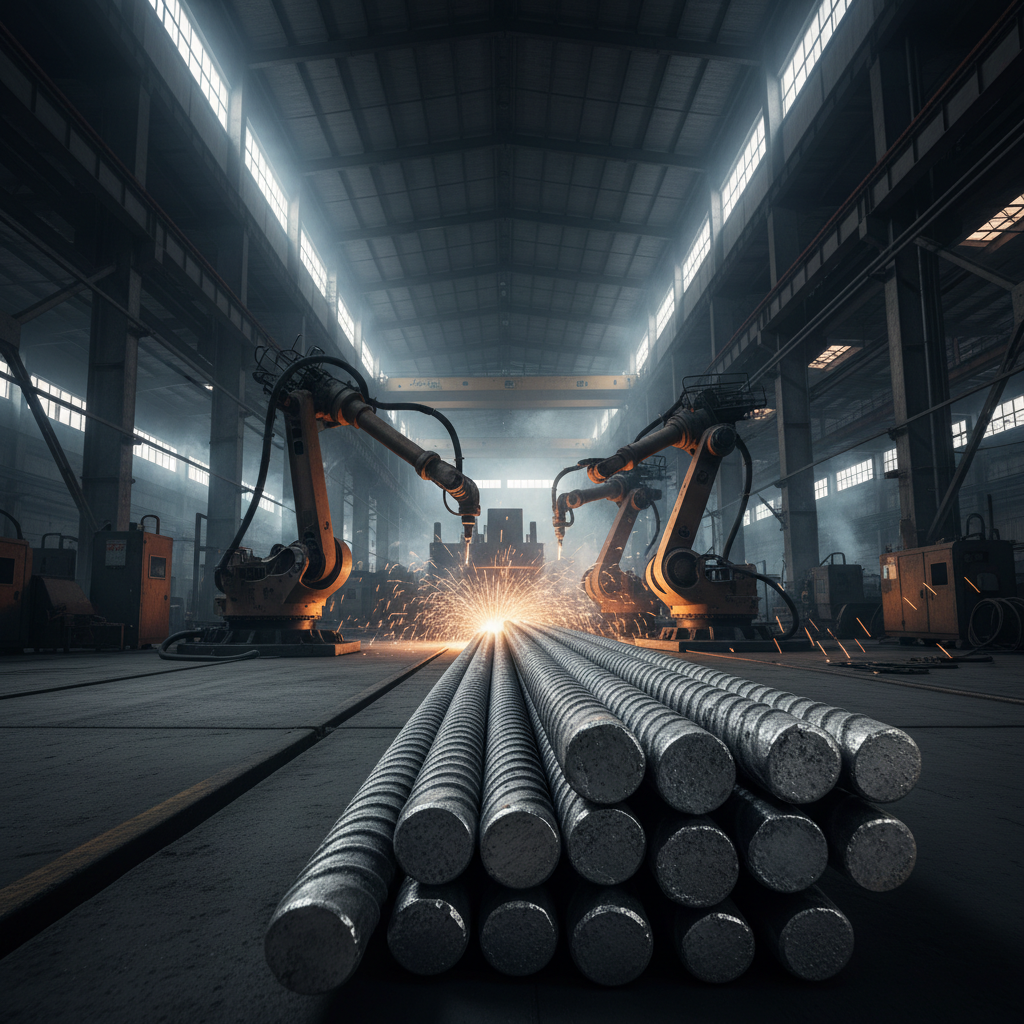
Selecting the right consumables for deep penetration welding often comes down to the chemistry of the coating. In industrial fabrication, the E6011 electrode is prized for its ability to handle contaminated or rusty surfaces, making it a staple for structural repairs and pipeline work.
The complexity of choosing a 6011 welding rod manufacturer lies in the balance between arc stability and slag removal. While the AWS specifications provide a baseline, the actual performance in the field depends heavily on the manufacturing precision of the cellulose-based coating.
This analysis explores the technical mechanics of E6011 electrodes, how they differ from other cellulosic options, and the critical factors that determine the quality of the deposited weld metal.


The E6011 electrode is categorized as a high-cellulose sodium electrode. Unlike rutile or basic coatings, the high cellulose content creates a forceful arc with a high concentration of gas, which pushes the molten slag away from the weld pool.
This chemical composition allows the arc to "dig" deeper into the base metal, effectively burning through rust, oil, and paint. This makes the product an essential tool for field welding where perfect surface preparation is often impossible.
The mechanical behavior of the E6011 arc is characterized by high current density and a concentrated heat zone. This concentration is what enables the "deep penetration" associated with cellulosic rods, allowing the welder to achieve full fusion in thicker sections without extensive beveling.
One of the critical technical advantages is the ability to operate on both AC and DC currents. This flexibility allows users to utilize a wider range of welding machines, from basic AC buzz boxes to advanced DC inverters, without sacrificing the penetration capabilities of the rod.
However, this aggressive arc also produces more spatter than E6013 or E7018. The trade-off is a weld that is far more capable of penetrating the root pass in pipe welding, where the gap between the two pieces must be fully fused.
When integrating E6011 into a project, engineers must weigh the speed of deposition against the required mechanical properties. While the penetration is superior, the weld bead is typically less smooth than those produced by low-hydrogen electrodes.
The primary value of E6011 is not aesthetic finish, but its ability to maintain arc stability and deep fusion in adverse environmental conditions and on poorly prepared substrates.
For high-stress applications, E6011 is often used for the root pass to ensure full penetration, while subsequent filler passes are completed with E7018 to provide higher tensile strength and lower hydrogen content to prevent cracking.
Evaluating the efficiency of a welding rod involves analyzing the ratio of deposited metal to consumed electrode. E6011 typically offers a high deposition rate for root passes, although the spatter loss is higher compared to gas-shielded processes like MIG.
To visualize the relative strengths of different electrodes, we can look at specific performance indices such as penetration depth, surface tolerance, and weld smoothness.
In a typical industrial setting, such as the repair of heavy agricultural machinery, E6011 is the first choice for tack welding and initial root passes. Its ability to arc through oxidation layers reduces the time spent on mechanical grinding, directly lowering labor costs.
For pipeline contractors, the E6011 (or its DC-only sibling E6010) is indispensable for the "hot pass." By ensuring the root is fully fused and the slag is easily managed, the welder can maintain a high travel speed while ensuring structural integrity.
The AWS A5.1 specification has evolved to ensure that E6011 electrodes provide consistent results regardless of the manufacturer. This standardization focuses on tensile strength (60,000 psi) and the ability to handle varying current types.
Modern manufacturing, as seen in companies like HEBEI YUJINHONG TECHNOLOGY CO., LTD, focuses on the purity of the cellulose and the precise ratio of sodium to ensure that the arc remains stable even at lower amperage settings.
Current trends show a shift toward improved coating adhesion to prevent the rods from chipping during transport, which can lead to arc instability and increased porosity in the final weld.
Choosing between E6011 and other electrodes depends on the specific requirements of the joint. If the priority is a clean, aesthetic finish on a clean plate, E6013 is preferable. If the priority is structural strength in a thick-walled pipe, E6011 is the logical start.
The following matrix provides a decision framework for procurement managers and lead welders when selecting consumables for different project phases.
By aligning the electrode choice with the substrate condition and the required weld position, companies can optimize their material usage and reduce the risk of post-weld failure.
| Application Scenario | Recommended Rod | Key Advantage | Critical Limitation |
|---|---|---|---|
| Rusty Farm Equipment | E6011 | High Penetration | Higher Spatter |
| Clean Sheet Metal | E6013 | Smooth Appearance | Shallow Fusion |
| High-Pressure Piping | E7018 | Low Hydrogen | Requires Clean Prep |
| Root Pass (Pipe) | E6011 | Deep Fusion | Rough Bead Finish |
| General Maintenance | E6011 | Versatility | Moderate Strength |
| Heavy Structural Beams | E7016 | Strength/Fusion | Tight Current Range |
The main difference is the current compatibility. E6010 is designed strictly for DC (Direct Current) welding, offering slightly better penetration and a more stable arc for expert welders. E6011 is formulated to work on both AC and DC, making it much more versatile for users who only have access to basic AC welding machines, although it may produce slightly more spatter.
E6011 is excellent for the root pass due to its deep penetration, but it is generally not used for the final filler passes in critical structural beams. Because it is not a low-hydrogen electrode, it does not provide the same resistance to cold cracking as E7018. The industry standard is to use E6011 for the initial bond and E7018 for the structural fill.
Spatter is a natural byproduct of the aggressive cellulosic arc. To minimize it, ensure your amperage is correctly tuned to the rod diameter—too high an amperage will exponentially increase spatter. Additionally, maintaining a shorter arc length and using an anti-spatter spray on the base metal can significantly reduce the cleanup time required after welding.
While it can be used, welding galvanized steel with E6011 requires caution. The zinc coating vaporizes and can cause porosity in the weld pool. It is highly recommended to grind off the galvanized layer in the weld area first. If that is not possible, E6011's deep penetration can help burn through the zinc, but the risk of porosity remains higher than with specialized coatings.
Sticking usually occurs due to two reasons: insufficient amperage or moisture in the coating. Since E6011 is a cellulosic rod, it is more tolerant of moisture than E7018, but extreme humidity can still affect arc initiation. Ensure your machine is set to the recommended range for the rod size and use a striking motion similar to lighting a match.
Unlike low-hydrogen rods, E6011 does not require an oven for storage. In fact, overheating them can damage the cellulose coating. They should be stored in a dry, cool environment in their original airtight packaging. If they become excessively damp, they may cause porosity, but usually, a light air-dry is sufficient to restore performance.
The E6011 electrode remains a fundamental tool in the welder's arsenal, bridging the gap between rough field conditions and the need for deep structural fusion. Its unique cellulose-sodium chemistry allows for a level of versatility that more specialized, low-hydrogen rods cannot match in the initial stages of fabrication.
For procurement teams, the focus should be on partnering with a manufacturer that maintains strict control over coating consistency and chemical purity. By balancing the use of E6011 for penetration with complementary electrodes for strength and finish, industrial operations can ensure both efficiency and long-term structural reliability.