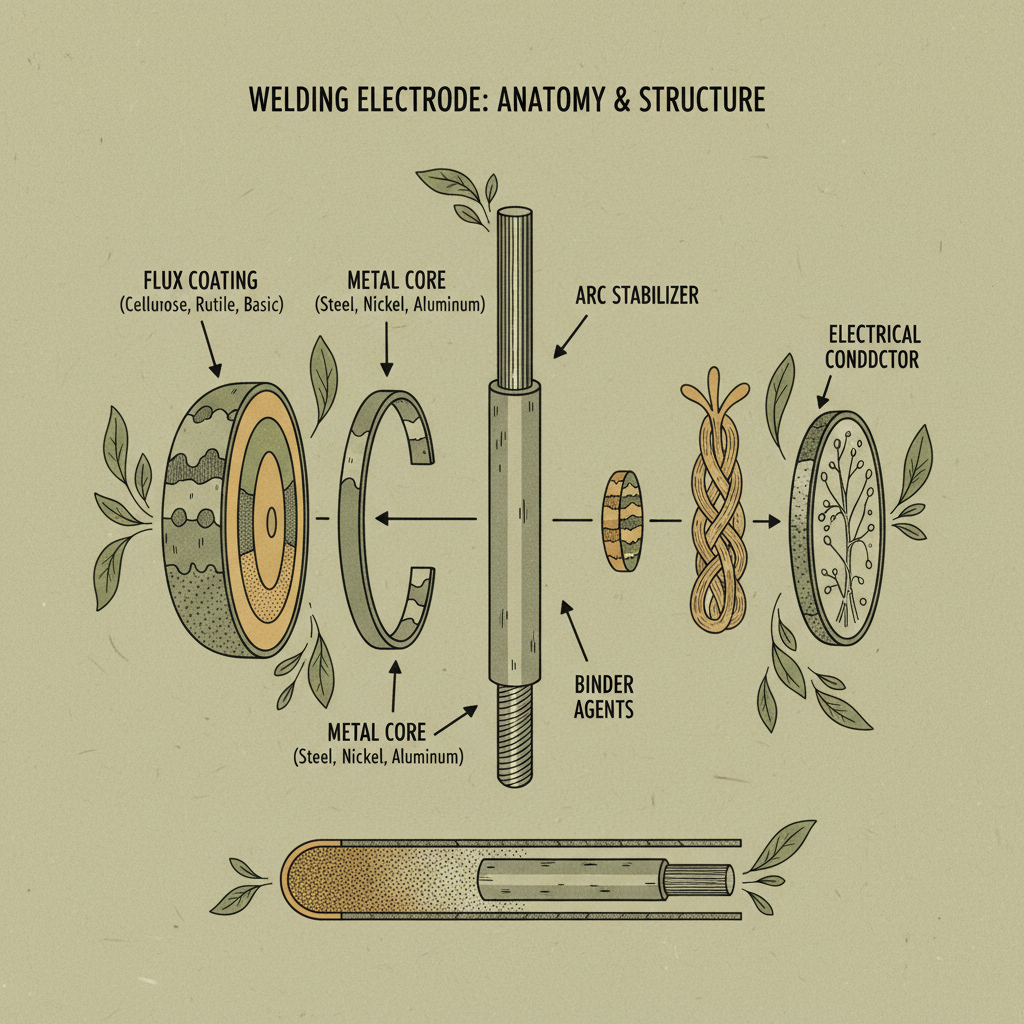
In the complex world of modern fabrication, the selection of a high-quality weld wire is not merely a procurement decision but a fundamental engineering choice. Whether it is used in massive shipbuilding projects or intricate automotive components, the integrity of the joint depends entirely on the chemical composition and consistency of the filler metal. Understanding the nuances of these materials allows manufacturers to optimize their workflow and ensure structural safety.
Globally, the demand for specialized welding consumables has surged as industries pivot toward higher-strength alloys and more sustainable building practices. From the integration of ER70S-6 in general construction to the precision of stainless steel welding, the versatility of modern weld wire options enables the creation of infrastructure that can withstand extreme environmental pressures. The ability to match the wire to the base metal is the key to avoiding common defects like porosity or cold laps.
For procurement managers and engineers, the challenge lies in balancing cost-efficiency with the rigorous standards set by organizations like the American Welding Society (AWS) and ISO. By focusing on the metallurgical properties and the delivery systems—such as flux-cored or solid wires—businesses can significantly reduce waste and downtime. This guide explores the technical depths and practical applications of various welding wires to help you make an informed selection for your next project.
Global Significance of Weld Wire in Modern Industry
The global infrastructure landscape is fundamentally supported by the quality of weld wire. From the skyscrapers of Dubai to the expansive bridge networks in China and the USA, the ability to join metals with absolute precision is what allows for the scaling of urban environments. According to industrial standards, the shift toward automated MIG/MAG welding has increased the consumption of continuous wire feeds, making the consistency of wire diameter and surface coating critical for preventing machine jams and ensuring bead uniformity.
Beyond simple construction, the role of weld wire extends into humanitarian and strategic sectors. In the rapid deployment of emergency bridges or the construction of prefabricated medical facilities in disaster-prone regions, the reliability of the welding consumable determines the speed of deployment and the safety of the occupants. The industry is now seeing a move toward higher-grade copper-coated wires to improve electrical conductivity and reduce oxidation, ensuring that even in humid or harsh environments, the weld remains uncontaminated.
Defining Weld Wire and Its Metallurgical Role
At its simplest level, weld wire is a filler metal delivered in a continuous spool, designed to be melted by an electric arc to fuse two or more base metal components. Unlike stick electrodes, which are consumed as a rod, weld wire is fed automatically, allowing for longer, uninterrupted welds and significantly higher deposition rates. This makes it the backbone of high-volume manufacturing where speed and repeatability are paramount.
Metallurgically, the wire is engineered to complement the base material. For instance, ER70S-6 contains specific levels of manganese and silicon to act as deoxidizers, ensuring that the weld pool remains clean even when the base metal has slight surface contaminants. The chemical balance of the wire determines the final mechanical properties of the joint, such as tensile strength, ductility, and resistance to cracking under thermal stress.
In the context of modern industrial needs, the definition of weld wire has expanded to include complex composite cores. Flux-cored wires, for example, incorporate a powdered core that provides its own shielding gas and slag, eliminating the need for external gas tanks in remote field operations. This evolution reflects the industry's need for flexibility, allowing high-strength welding to occur in wind-swept environments where traditional gas shielding would be blown away.
Core Components and Performance Factors
The performance of weld wire is dictated by several critical factors, foremost among them being chemical purity and dimensional tolerance. A variation of even a few microns in the wire diameter can lead to erratic arc stability, causing spatter and increasing the amount of post-weld cleanup required. High-grade wires are manufactured with stringent controls to ensure a smooth surface and precise geometry.
Another essential component is the coating, typically copper. Copper coating on the weld wire serves two primary purposes: it prevents the steel core from rusting during storage and improves the electrical contact between the contact tip and the wire. This reduction in electrical resistance leads to a more stable arc and less heat buildup in the welding torch, extending the lifespan of the equipment.
Finally, the "feedability" of the wire—its ability to unspool without kinking or tangling—is a key operational factor. This depends on the winding tension and the quality of the spool material. In high-speed robotic cells, poor feedability can result in costly downtime. Therefore, the synergy between the wire's mechanical flexibility and its metallurgical composition is what defines a premium professional-grade product.
Global Applications and Industry Use Cases
The application of weld wire spans virtually every industrial sector. In the automotive industry, high-tensile strength wires are used to create chassis and safety cages that must absorb impact energy during collisions. In the maritime sector, specialized submerged arc welding wires (such as EM12K) are employed to join the massive steel plates of cargo ships, providing deep penetration and high-quality joints that can withstand the corrosive nature of saltwater.
In remote industrial zones, such as oil pipelines in the Arctic or mining operations in the Australian Outback, the use of flux-cored weld wire is indispensable. These environments make the transport of heavy shielding gas cylinders impractical. By using self-shielding wires, engineers can maintain structural integrity in the field, ensuring that critical energy infrastructure remains operational without the need for controlled workshop environments.
Performance Analysis of Various Weld Wire Types
Long-Term Value and Reliability Advantages
Investing in premium weld wire translates directly into lower total cost of ownership (TCO). While cheaper alternatives may seem attractive initially, they often lead to higher rates of weld failure, increased spatter (which wastes material), and longer grinding times to clean the joint. A high-quality wire ensures a "first-time-right" approach, reducing the need for expensive rework and ensuring the safety of the end product.
Beyond the financial logic, there is an emotional and ethical dimension to choosing reliable welding consumables: trust and safety. In critical applications like pressure vessels or aircraft frames, a single point of failure in the weld can be catastrophic. Using certified, traceable weld wire provides engineers and clients with the peace of mind that the structure meets all international safety codes, thereby upholding the dignity and professional reputation of the manufacturer.
Future Innovations in Welding Technology
The future of weld wire is being shaped by the drive toward "Green Steel" and carbon neutrality. We are seeing the development of new alloy compositions that require lower heat inputs for the same strength, reducing the energy consumption of the welding process. Furthermore, innovations in metallurgy are allowing for the creation of wires that can join dissimilar metals—such as aluminum to steel—more effectively, which is crucial for the lightweighting of electric vehicles.
Digital transformation is also playing a role. "Smart wires" are being conceptualized where the chemical composition is optimized for real-time adjustment by AI-driven welding robots. These systems can sense the gap width or the material thickness and adjust the wire feed speed and voltage instantaneously to maintain a perfect bead, effectively removing the risk of human error from the process.
Lastly, sustainability is driving the industry toward better recycling programs for spools and the reduction of hazardous fumes in flux-cored wires. The goal is to create a circular economy where the scrap from the welding process is efficiently reclaimed, and the consumables used during fabrication have a minimal environmental footprint without compromising the structural integrity of the build.
Overcoming Common Challenges in Wire Selection
One of the most frequent challenges in using weld wire is matching the filler metal to a base metal with unknown specifications. This often leads to "over-welding" or using a wire that is too rigid, which can cause hydrogen-induced cracking. The solution lies in performing a spectral analysis of the base material and referencing AWS classification charts to select a wire that provides a compatible coefficient of thermal expansion.
Another common issue is the occurrence of porosity, often caused by contaminated wire or improper shielding gas flow. Expert insights suggest that maintaining a strict storage protocol—keeping wires in a dry, temperature-controlled environment—and ensuring the use of high-purity shielding gases can eliminate these defects. For flux-cored wires, proper baking and storage are essential to prevent moisture absorption.
Finally, the struggle between productivity and quality is often solved through the implementation of pulsed-MIG welding. By using a specialized weld wire designed for pulsed current, operators can achieve a spray-transfer effect at lower average currents, reducing heat-affected zones (HAZ) and preventing warp in thin-gauge materials.
Comparative Analysis of Weld Wire Selection Criteria
| Wire Category |
Primary Use Case |
Deposition Rate |
Skill Level Req. |
| Solid ER70S-6 |
General Mild Steel |
Medium-High |
Moderate |
| Flux-Cored (Self-Shield) |
Outdoor Construction |
Very High |
High |
| Stainless Steel 308L |
Food/Medical Grade |
Medium |
High |
| Submerged Arc (EM12K) |
Heavy Plate/Shipbuilding |
Ultra High |
Expert |
| Aluminum Wire (4043) |
Aerospace/Lightweight |
Medium |
High |
| Copper Coated Carbon |
Automotive Parts |
High |
Moderate |
FAQS
For general-purpose mild steel, ER70S-6 is the industry standard due to its excellent deoxidizers, which handle surface rust and mill scale. If you are working outdoors where wind can disturb shielding gas, a self-shielded flux-cored wire is a better choice. Always verify the required tensile strength of your project against the AWS classification of the wire to ensure the joint meets safety specifications.
Excessive spatter is usually caused by a combination of improper voltage settings, contaminated base metal, or low-quality weld wire with inconsistent diameters. Ensure your wire is clean and that the copper coating is intact. Additionally, check your shielding gas flow rate; too low a flow can cause atmospheric contamination, while too high a flow can create turbulence that destabilizes the arc.
Yes, for most applications. The copper coating provides a protective layer against corrosion during storage and significantly improves electrical conductivity at the contact tip. This results in a more stable arc and reduced wear on the consumables. Uncoated wires are generally only used in very specific specialized processes or where copper contamination must be strictly avoided for metallurgical reasons.
Solid wire is a homogeneous metal rod that requires an external shielding gas (like Argon or CO2) to protect the weld pool. Flux-cored wire has a tubular design filled with flux, which can either be self-shielding or require supplemental gas. Flux-cored wires generally offer higher deposition rates and better performance in all-position welding, whereas solid wires produce cleaner welds with less slag.
Weld wire should be stored in a cool, dry environment. For solid wires, keeping them away from moisture prevents surface oxidation. For flux-cored wires, moisture absorption is a critical issue that can lead to hydrogen cracking and porosity. Using sealed containers or specialized ovens for flux-cored wires is highly recommended to maintain the chemical integrity of the core flux.
Yes, this is common in "surfacing" or "cladding" applications where a corrosion-resistant layer is needed on a carbon steel base. However, you must use a compatible grade, such as ER309L, which is specifically designed for joining dissimilar steels. Using a standard 308L wire on carbon steel can lead to brittle joints and premature failure due to carbon migration.
Conclusion
The selection of the appropriate weld wire is a critical intersection of chemistry, physics, and economic strategy. By understanding the relationship between wire composition, coating quality, and application environment, manufacturers can ensure that their structures are not only built efficiently but are fundamentally safe and durable. From the precision of solid wires in robotic cells to the versatility of flux-cored options in the field, the right consumable is the difference between a failed joint and a lifelong structure.
Looking forward, the industry's move toward automation and sustainable metallurgy will only increase the importance of high-specification welding consumables. We encourage engineers and procurement specialists to move beyond "lowest-cost" sourcing and instead prioritize traceability and performance metrics. For those seeking premium, industry-certified solutions that guarantee consistency and strength, we invite you to explore our comprehensive range of welding products. Visit our website: www.steeltoolschina.com