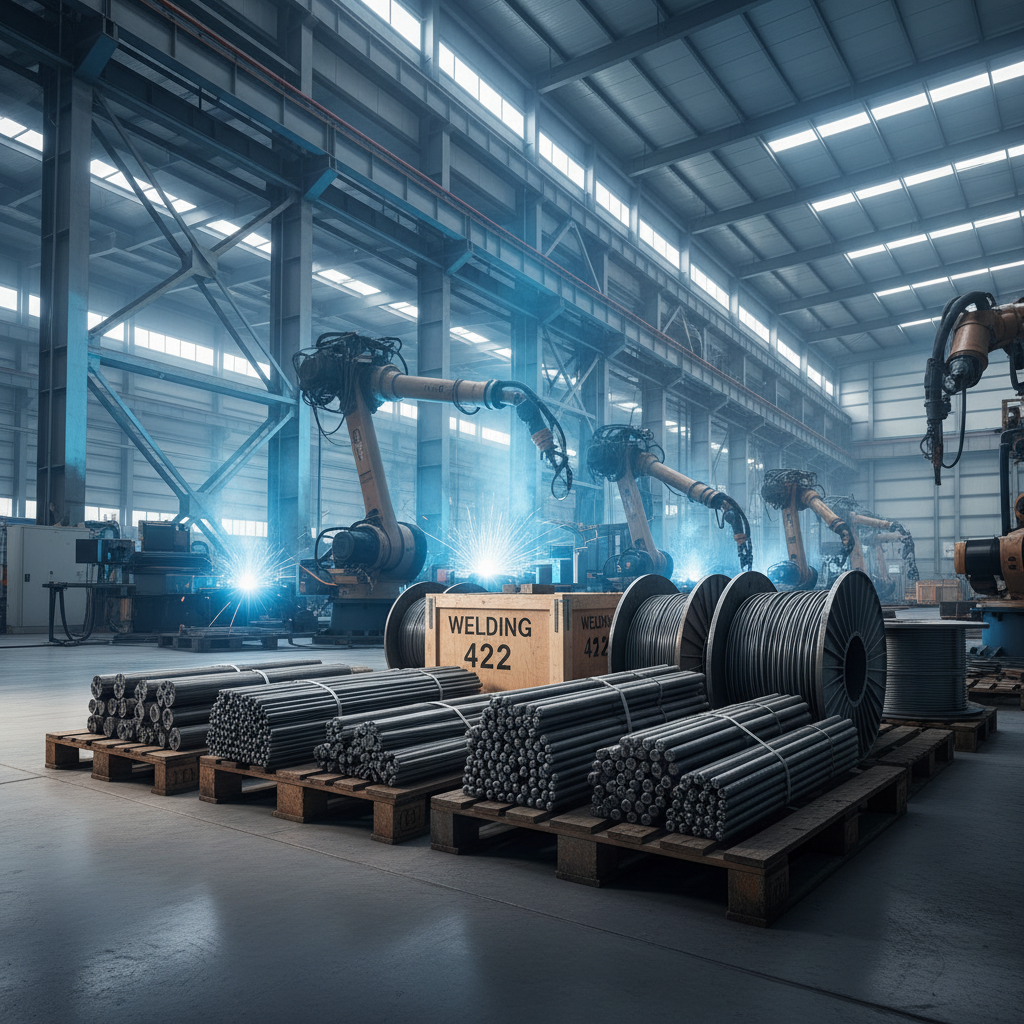
The modern industrial landscape relies heavily on precise joining technologies to maintain structural integrity and production speed. Among these, the use of high-quality carbon steel wires has become a cornerstone for fabrication in the automotive, shipbuilding, and heavy machinery sectors. Understanding the nuances of gas-shielded arc welding is essential for engineers looking to optimize weld quality and reduce post-processing costs.
The demand for efficiency has led to the widespread adoption of specialized filler metals that can handle various positions and stress levels. By utilizing advanced metallurgy, manufacturers can now achieve higher cladding efficiency and significantly lower porosity in the weld metal, ensuring that joints can withstand extreme operational pressures. This shift toward high-performance consumables is driving a global standard in metal tool manufacturing.
When selecting the right materials, the co2 solid welding wire stands out as a versatile choice for 500MPa level carbon steel applications. By balancing deoxidizing elements like silicon and manganese, this technology allows for a beautiful appearance and minimal spatter, making it an indispensable asset for high-strength steel fabrication worldwide.
Technical Specifications of ER70S-6 Wire
The ER70S-6 is a high-performance 500MPa level carbon steel wire designed for versatility in gas-shielded arc welding. It is specifically engineered to be used with CO2 or a mixture of 80% Argon and 20% CO2, ensuring that the weld pool remains stable and the arc is consistent. This allows operators to achieve high cladding efficiency while maintaining a professional, aesthetic finish on the weld bead.
One of the most significant advantages of this material is its resistance to weld metal porosity. By controlling the chemical composition, it minimizes the risk of internal voids, which is critical for structural components. Furthermore, the low spatter levels reduce the need for extensive grinding and cleaning, directly translating to lower labor costs and faster production cycles.
Gas Shielding Methods and Their Impact
Gas shielded welding is broadly categorized into inert gas shielded welding (TIG and MIG), active gas shielded welding (MAG), and self-shielded welding. For the co2 solid welding wire, MAG welding is the primary method, utilizing CO2 as the main shielding gas to protect the molten pool from atmospheric contamination.
While pure Argon is typically reserved for TIG welding, MIG welding often incorporates small amounts of Oxygen (2%) or CO2 (5%) to improve arc stability. For more demanding carbon steel applications, a mixture of CO2 and Argon, or even a three-gas mix including Oxygen, can be employed to further refine the process performance and bead geometry.
The choice of gas directly influences the weld's penetration and the amount of spatter produced. In MAG welding, the oxidizing nature of the CO2 gas necessitates a welding wire with higher levels of deoxidizers to ensure the weld remains clean and strong, preventing the formation of slag inclusions within the joint.
The Role of Deoxidizing Elements
In the context of using a co2 solid welding wire, the chemistry of the filler metal is paramount. Because the shielding gas in MAG welding is oxidizing, elements like Silicon (Si) and Manganese (Mn) must be increased. These elements act as scavengers, reacting with oxygen to prevent porosity and ensuring a smooth transition between the base metal and the filler.
When welding high-strength steel, the carbon content in the weld is typically kept lower than that of the base metal, while the manganese content is increased. This adjustment is not only for deoxidation but also to meet the specific alloy composition requirements of the weld, ensuring that the joint does not become brittle.
Furthermore, managing the Silicon content is a delicate balance. While Si is necessary for cleaning the weld, excessively high levels can negatively impact the low-temperature toughness of the joint. Proper calibration of these elements in the co2 solid welding wire ensures that the final product is both strong and ductile across various temperatures.
Performance Comparison Across Welding Positions
The versatility of ER70S-6 allows it to be utilized across all welding positions, including PA (flat), PB (horizontal-vertical), PC (horizontal), PD (overhead), PE (vertical up), and PF (vertical down). This flexibility is crucial for complex assemblies where the part cannot be rotated to suit a single welding angle.
Maintaining a consistent bead profile in vertical and overhead positions requires a wire with stable arc characteristics. The specialized formulation of this carbon steel wire ensures that the molten metal freezes quickly enough to prevent sagging, yet flows sufficiently to ensure full penetration and a beautiful appearance.
Performance Rating of co2 solid welding wire by Position
MIG vs MAG: Choosing the Right Process
MIG (Metal Inert Gas) welding is primarily utilized for high-alloy steels, such as stainless steel, where a pure Argon shield prevents oxidation. However, for low-alloy and carbon steels, the process is often transitioned to MAG (Metal Active Gas) welding by adding CO2 or O2 to the Argon. This change improves the arc characteristics and the anti-porosity ability of the weld.
For those using co2 solid welding wire, MAG is the standard. When welding ultra-low carbon stainless steel, however, one must avoid Ar + 5% CO2 mixtures to prevent weld carburization, opting instead for Ar + 2% O2. This distinction is critical for maintaining the chemical purity and corrosion resistance of the joint.
Industrial Applications of Carbon Steel Welding
In the automotive sector, carbon steel welding is used for everything from chassis construction to exhaust systems. The high cladding efficiency of ER70S-6 allows for rapid assembly lines where downtime is costly. The ability to perform all-position welding means that complex frames can be joined without needing expensive rotating jigs.
Heavy machinery and construction equipment also rely on this technology for the fabrication of booms, buckets, and structural supports. These components are subject to high stress and fatigue, making the 500MPa strength level and low porosity of the co2 solid welding wire essential for safety and longevity.
Furthermore, in shipbuilding and offshore platforms, the resistance to porosity and the beautiful appearance of the weld are not just aesthetic concerns but markers of quality. Proper gas shielding ensures that these massive structures can withstand the corrosive and high-pressure environments of the open sea.
Optimization Strategies for Weld Quality
To maximize the potential of a co2 solid welding wire, operators must optimize the gas flow rate and voltage settings. A common challenge is the balance between penetration and spatter; too high a voltage may increase spatter, while too low a voltage can lead to lack of fusion. Fine-tuning the Argon/CO2 ratio is often the key to achieving a "perfect" bead.
Surface preparation also plays a critical role. Ensuring the base metal is free of oil, rust, and mill scale prevents the introduction of contaminants into the weld pool. When combined with the deoxidizing properties of the ER70S-6 wire, this leads to a weld with virtually no porosity and high structural integrity.
Finally, the implementation of automated welding systems can further enhance consistency. Robotics paired with high-quality carbon steel wire ensure that every weld is identical, reducing the margin of human error and significantly increasing the throughput of the manufacturing facility.
Comparative Analysis of Welding Consumables and Gas Mixes
| Wire Type |
Shielding Gas Mix |
Anti-Porosity Score |
Appearance Rating |
| ER70S-6 (Solid) |
80% Ar + 20% CO2 |
9/10 |
10/10 |
| ER70S-6 (Solid) |
100% CO2 |
8/10 |
7/10 |
| Flux Cored Wire |
Mixed Gas |
7/10 |
6/10 |
| Stainless Steel Wire |
Pure Argon |
10/10 |
9/10 |
| Low Carbon Wire |
Ar + 2% O2 |
9/10 |
8/10 |
| Mild Steel Wire |
Ar + 5% CO2 |
8/10 |
8/10 |
FAQS
MIG uses an inert gas (like pure Argon) and is typically for non-ferrous or high-alloy metals. MAG uses an active gas (like CO2), which is necessary for carbon steels. ER70S-6 is designed for MAG welding because the active gas improves penetration and arc stability in carbon steel, though it requires more deoxidizers in the wire to prevent porosity.
Excessive spatter is often caused by incorrect voltage settings, contaminated base metal, or an improper gas mix. Ensure your voltage is balanced with your wire feed speed and check that the material is clean. Switching from 100% CO2 to an Ar/CO2 mix can also significantly reduce spatter and improve the weld's appearance.
Yes, it is highly versatile and suitable for all positions, including PA, PB, PC, PD, PE, and PF. This makes it an excellent choice for complex structural work where the workpiece cannot be moved, providing stable arc control and high cladding efficiency regardless of the angle.
The 500MPa level refers to the yield strength of the carbon steel wire. This ensure that the weld bead is as strong as, or stronger than, the base metal. By managing the Manganese and Silicon levels, the wire provides a high-strength joint that resists deformation under heavy structural loads.
Because CO2 is an oxidizing gas, it introduces oxygen into the weld pool. Silicon and Manganese act as deoxidizers; they react with the oxygen to form slag that floats to the surface, thereby preventing internal porosity and ensuring a dense, high-quality weld metal.
Generally, yes. An 80% Ar / 20% CO2 mix typically provides a more stable arc, lower spatter levels, and a more attractive weld bead compared to pure CO2. While pure CO2 is more cost-effective and provides deep penetration, the mixed gas improves the overall process performance and reduces post-weld cleaning.
Conclusion
The selection of a high-quality co2 solid welding wire like the ER70S-6 is fundamental to achieving industrial-grade welds. By leveraging the 500MPa strength level, superior deoxidation properties, and all-position versatility, manufacturers can ensure their products meet the highest standards of structural integrity and aesthetic quality. The synergy between the correct filler metal and optimized gas shielding is what separates a standard joint from a high-performance weld.
Looking forward, the integration of automation and refined gas mixtures will continue to push the boundaries of fabrication efficiency. For companies aiming to reduce waste and increase reliability, investing in precision-engineered carbon steel consumables is the most effective path. We invite you to explore our full range of professional welding solutions to optimize your production line. Visit our website: www.steeltoolschina.com