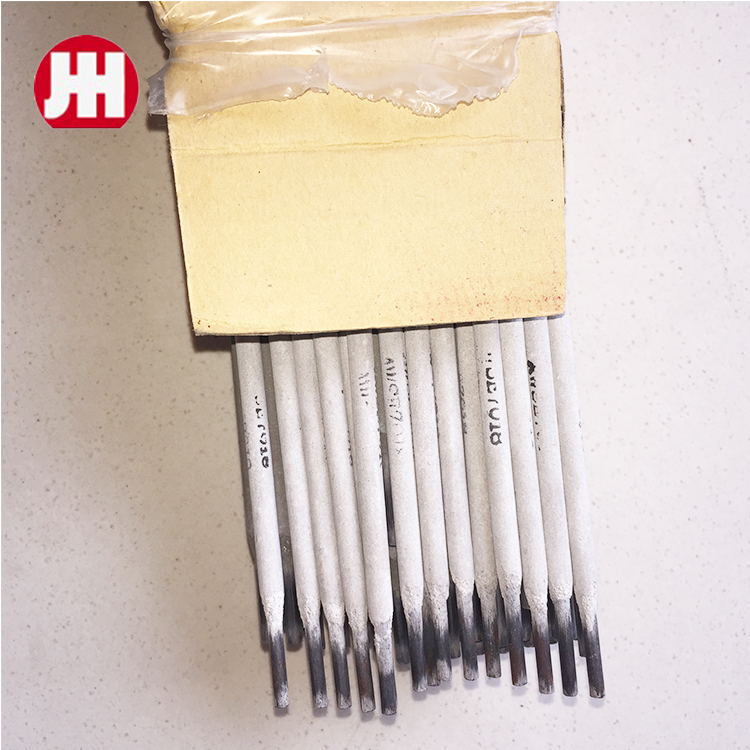
High-Performance welding wire Solutions for Russian Heavy Industry

Engineered for extreme climates and industrial-grade durability across the Russian Federation's manufacturing sector.

High-Performance welding wire Solutions for Russian Heavy Industry

Providing precision-engineered consumables that ensure structural integrity and weld quality under the most demanding operational conditions in Europe and Russia.

The Landscape of Welding Consumables in Russia

Analyzing the impact of extreme temperature fluctuations on metal joining technologies.

The Russian manufacturing landscape is characterized by massive scale and extreme environmental challenges. From the Arctic north to the industrial hubs of the Urals, the demand for a robust welding electrode is driven by the need for materials that can withstand severe thermal expansion and contraction without cracking.

Economically, the region is seeing a shift toward localized production and higher quality standards. The reliance on a high-grade metal welding rod has increased as the energy and oil sectors upgrade their pipeline infrastructure to prevent corrosion in permafrost zones.

Furthermore, the rise of specialized transport manufacturing in the region has spiked the demand for mig aluminum wire, as lightweighting becomes critical for fuel efficiency in long-haul logistics vehicles traversing the vast Eurasian terrain.

Evolution and Trajectory of Joining Technologies

From traditional manual arcs to automated robotic precision.

Market Development History

During the mid-20th century, the Russian market relied heavily on basic carbon-steel welding rod types, focusing on volume and structural strength for massive Soviet-era industrialization projects.

By the early 2000s, the industry transitioned toward specialized alloys. The introduction of refined flux coatings in electrodes allowed for deeper penetration and better weldability in low-temperature environments, marking a shift toward metallurgy-driven quality.

In the last decade, the adoption of MIG/MAG automation has revolutionized the shop floor, replacing manual rods with high-speed wire feeding systems to meet the tight tolerances required by modern aerospace and automotive standards.

Future Development Trends

Smart Consumable Integration

Integration of IoT-enabled monitoring to track the consumption and performance of welding wires in real-time during large-scale infrastructure builds.

Eco-Friendly Low-Fume Flux

Development of new electrode coatings that reduce hazardous emissions, aligning with stricter European environmental regulations affecting the region.

Advanced Alloy Synthesis

Shift toward nano-structured filler materials to enhance the fatigue strength of joints in extreme Siberian cold.

Industry Trends and Future Outlook

Strategic shifts in cutting-tool and welding consumable integration.

Automation Surge
Rapid transition from manual handheld tools to robotic welding cells to increase throughput.
Alloy Specialization
Increasing demand for specialized aluminum and nickel alloys for the cryogenic energy sector.
Precision Tooling
Synergy between high-precision cutting tools and welding prep to reduce post-weld machining.
Supply Chain Resilience
Developing diversified sourcing for raw metal rods to ensure production continuity.

Industry Outlook

Based on Google search trend analysis in the CIS region, there is a significant uptick in queries regarding "automated welding efficiency" and "high-strength alloy wires." This indicates a shift from simple repair welding to complex, high-precision manufacturing.

Over the next 3-5 years, we expect the Russian market to prioritize consumables that offer high deposition rates and minimal spatter, reducing the need for secondary grinding and finishing in heavy equipment production.

Localized Application Scenarios in Russia

Tailored welding solutions for the region's most critical industrial sectors.

01. Arctic Pipeline Construction

Using specialized low-hydrogen electrodes to prevent cold cracking in natural gas pipelines across the Yamal Peninsula.

02. Heavy Mining Equipment

Applying high-strength metal welding rods for the reinforcement of excavation buckets and chassis used in the Norilsk mining regions.

03. Aerospace Component Assembly

Utilizing high-purity mig aluminum wire for the construction of lightweight fuselage parts and satellite frames in Russian aerospace hubs.

04. Naval Shipbuilding in Vladivostok

Deploying corrosion-resistant welding wires for the hulls of ice-breaking vessels to endure the abrasive nature of Arctic ice.

05. Railway Infrastructure Repair

Implementing rapid-deployment welding rods for the maintenance of the Trans-Siberian Railway to minimize downtime during winter.

Brand Story

The Global Development Journey of Hebei Yujinhong Technology Co., Ltd.

Foundational Precision

Established with a focus on the core of metalworking, we began by solving the fundamental inconsistency of filler metals in high-stress environments.

Technological Breakthrough

Developed proprietary alloy mixing techniques that significantly reduced porosity in aluminum welding, setting a new industry benchmark.

Global Expansion

Expanded our footprint into Europe and Russia, adapting our product lines to meet the rigorous GOST and ISO standards.

Industrial Synergy

Integrated cutting tool expertise with welding consumables to provide a complete "Cut-and-Join" solution for the manufacturing sector.

Future Vision

Leading the transition toward sustainable, low-carbon welding materials to support the global green manufacturing initiative.

Comprehensive Welding Portfolio for Russia & Europe

A curated selection of consumables designed for extreme durability and precision.

Frequently Asked Questions for Russian Industrial Users

Expert answers to the most common technical challenges in the region.

How to choose the right welding electrode for sub-zero temperatures?

For Arctic conditions, we recommend low-hydrogen electrodes with specific alloying elements like Nickel to maintain ductility and prevent brittle fractures at extremely low temperatures.

What is the best mig aluminum wire for aerospace applications?

The ER4043 or ER5356 series are typically preferred depending on the required strength and corrosion resistance of the aluminum alloy being joined.

Can a standard metal welding rod be used for pipeline repair?

While standard rods work for basic repairs, pipeline integrity requires high-tensile, impact-tested rods that comply with international pipeline safety standards to prevent leaks.

How does welding wire diameter affect deposition rates in automation?

Larger diameter wires increase the deposition rate but require higher current. For precision robotics, a balanced diameter is chosen to optimize speed without compromising the heat-affected zone.

What prevents moisture absorption in welding rods during Siberian winters?

We utilize vacuum-sealed packaging and recommend using heated ovens for storage and pre-heating electrodes to ensure the weld remains free of hydrogen-induced cracking.

Which welding rod is most efficient for heavy equipment chassis?

High-manganese and high-carbon steel rods are ideal for chassis work as they provide the necessary hardness and fatigue resistance for heavy-load bearing structures.

Get Your Technical Consultation

Our engineering team is ready to provide customized welding solutions for your projects in Russia.

Contact Us Now

If you are interested in our products, you can choose to leave your information here, and we will be in touch with you shortly.